

Keeping the ETL Current: The Role of the Annual Research Programme
How the ETL keeps pace with a changing market
The ETL helps manufacturers demonstrate that their products deliver high levels of energy efficiency, while giving purchasers and specifiers a trusted source of independently verified product information. To remain a valuable resource, the ETL needs to reflect the technologies, testing standards and product performance currently available on the market. What represented leading energy efficiency performance several years ago may no longer distinguish the most efficient products available today.
As new technologies emerge, standards change and products become more efficient. The Annual Research Programme lets us keep pace with these changes, reviewing technology categories and identifying where criteria need to be updated. Through technical research, evidence gathering and consultation, we assess whether existing criteria continue to reflect the market and whether they still identify the most energy efficient technologies available.
What are the ETL criteria?
The ETL currently lists around 8,000 products across 65 sub-technology categories, grouped under 21 broader technology categories. New categories may also be added over time, including where they are identified through the Annual Research Programme or submitted as a New Technology Proposal.
Each sub-technology category has its own criteria document, setting out the technical, performance and evidence requirements that products must meet to be listed on the ETL. They define:
- the level of energy performance products must demonstrate under defined conditions
- the evidence manufacturers need to provide
- the recognised testing standards that apply
The criteria provide a benchmark to identify the highest energy efficient products in each category, typically representing the top 25% on the market in their class. This threshold is set deliberately high, rather than reflecting average market performance. As a government backed scheme managed by the Department for Energy Security and Net Zero, the ETL provides independent confirmation that a product’s energy efficiency performance is among the best available in its category, rather than simply meeting the minimum standard.
How the Annual Research Programme works
Each year, through the Annual Research Programme, we assess selected technology categories to determine whether existing product criteria remain relevant. As a baseline, we review each technology category at least once every four years, although some categories may be reviewed more often where significant technical developments make this necessary.
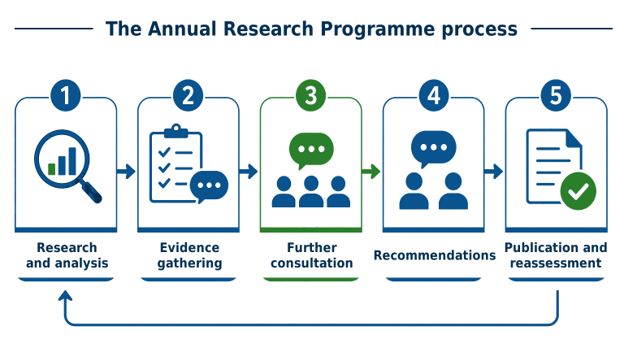
The process includes five main stages:
- Research and analysis
We review product performance, market trends and testing standards in the selected categories. - Evidence gathering
Through questionnaires and discussions with manufacturers, trade associations and other industry experts, we find out what is changing in the market. - Further consultation
Where more complex questions arise, we gather additional evidence through workshops and further discussion with stakeholders. - Recommendations
We share proposed changes with stakeholders, who can respond before final recommendations are submitted for assessment. - Publication and reassessment
Once updated criteria are published, we reassess listed products in those categories so that only products meeting the revised criteria remain on the ETL.
The importance of consultation
Consultation plays a central role in the Annual Research Programme because it gives us access to specialist knowledge from those working directly with the technologies under review. It brings insight that technical research alone may not capture, helping us understand how technologies are evolving, where product performance or testing practices have changed, and where the existing criteria may need to be clarified or improved.
Technical reviewers and researchers analyse the evidence, while manufacturers and product development experts contribute practical insight into how products are designed, tested and improved. Trade associations offer a sector-wide perspective, and engineers and other technical specialists add expertise on product performance, testing methodologies and market change.
Because contributors may hold different commercial interests, we assess all input independently. This keeps the review process grounded in industry expertise while remaining impartial, and gives the ETL a balanced evidence base for informed, objective decision making. As a result, the process reflects the market as a whole, rather than the priorities of any single stakeholder group.
What this means for manufacturers
As a manufacturer, you can be confident that regular reviews keep ETL requirements aligned with current market standards and energy performance expectations. This helps your ETL listing remain a meaningful, independent mark of high performance.
The review process also gives you the opportunity to contribute expertise and evidence. Your input helps criteria reflect real market conditions and remain technically robust, giving you a clearer reference point for understanding ETL requirements and developing products that meet customer expectations.
What this means for purchasers and specifiers
If you purchase or specify energy efficient technologies, the Annual Research Programme helps ensure the ETL remains a reliable resource. By ensuring the criteria remain aligned with current market conditions, standards and performance expectations, the list continues to identify only the most energy efficient products available on the UK market.
This gives you a stronger and reliable basis for procurement decisions, supported by technical research, market insight and independent assessment. It means you can choose high performing products with greater confidence, without carrying out a detailed technical assessment of every available option.
Raising the bar for energy efficiency
By setting criteria well above minimum requirements, the ETL does more than keep pace with the market. It sets a high performance benchmark for energy efficiency, helping to identify products that perform among the best available in their category. The Annual Research Programme plays an essential role in maintaining that benchmark. Through regular review of technology categories, and criteria updates where evidence shows they are needed, the programme keeps the ETL grounded in technical evidence, market insight and industry expertise. This helps the scheme remain relevant and useful in a rapidly changing market.
Find out more
Whether you are looking to list a product on the ETL or want to use it to inform a procurement decision, a range of resources is available to help.
Thinking about listing a product on the ETL?
Start your ETL application today. If you want to understand the process first, read our application guide for information on eligibility criteria, application steps and the documentation you will need.
Looking for energy efficient equipment?
Explore around 8,000 independently tested and stringently assessed products on the ETL. If you would like guidance before your search, read our step-by-step guide to learn how to identify, compare and select energy efficient products with confidence.